
IR
Marine coatings
We offer a range of marine coatings that leverage our advanced technologies, including antifoulings that help reduce environmental impact by improving fuel efficiency and lowering CO₂ emissions. Backed by expertise cultivated over many years, we have built a solid position in both domestic and international markets.
From Small Boats to Large Ships
When you hear the word “ship,” do you think of yachts, passenger ships, or fishing vessels? Or do you think of cargo ships and oil tankers supporting international trade? Vessels vary widely by type and size, and each requires different performance characteristics. We provide a broad product lineup tailored to vessel type and operating environment.


The Three Roles of Marine Coatings
Appearance
Marine coatings add color and gloss to enhance the appearance of ships.
Protection
Ships are exposed to severe conditions, including intense sunlight, prolonged immersion in seawater, and contact with salt and diverse marine organisms. Anticorrosive coatings shield hulls from these conditions and help extend service life.
Functional enhancement (antifouling, etc.)
Antifouling performance, which prevents marine organisms such as barnacles, shellfish, and algae from attaching to a ship’s hull, is a key property of marine coatings. Marine growth increases surface resistance and reduces fuel efficiency. Antifoulings suppress surface resistance, enabling smoother navigation while contributing to improved fuel efficiency and reducing greenhouse gas (GHG) emissions.
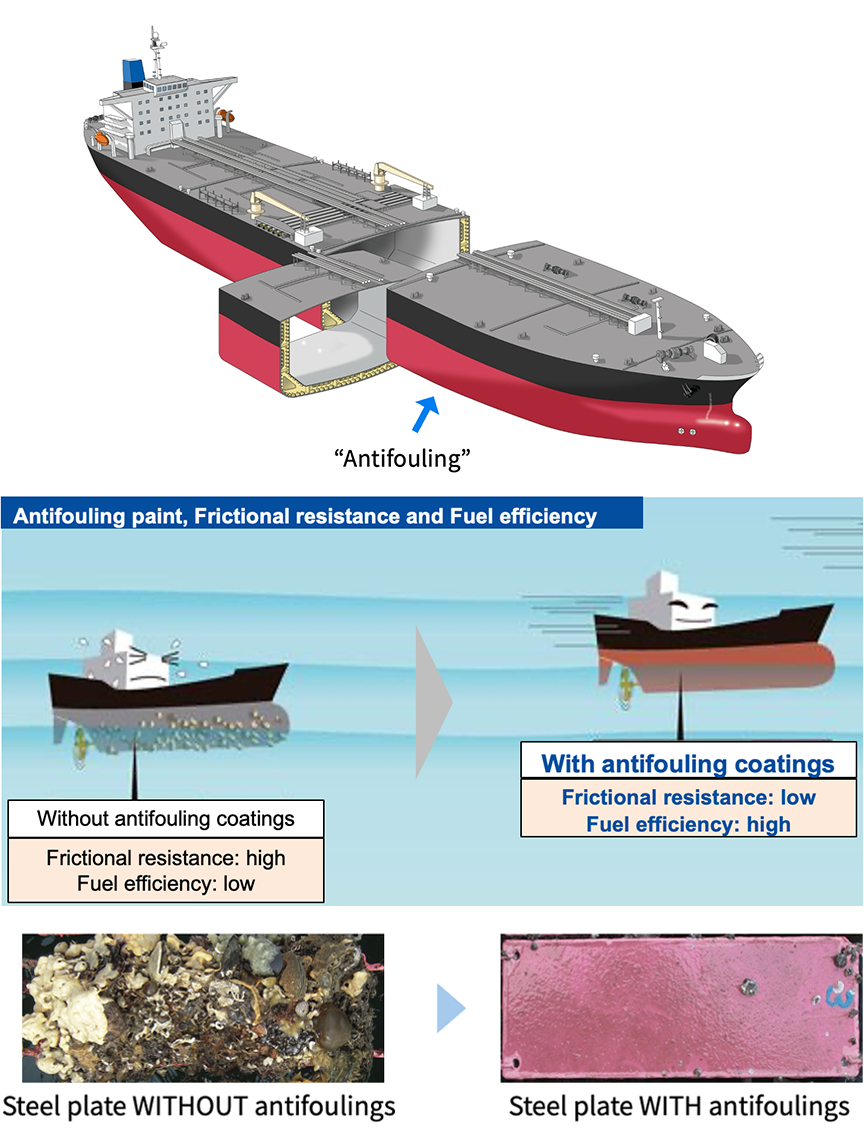
How Antifoulings Work
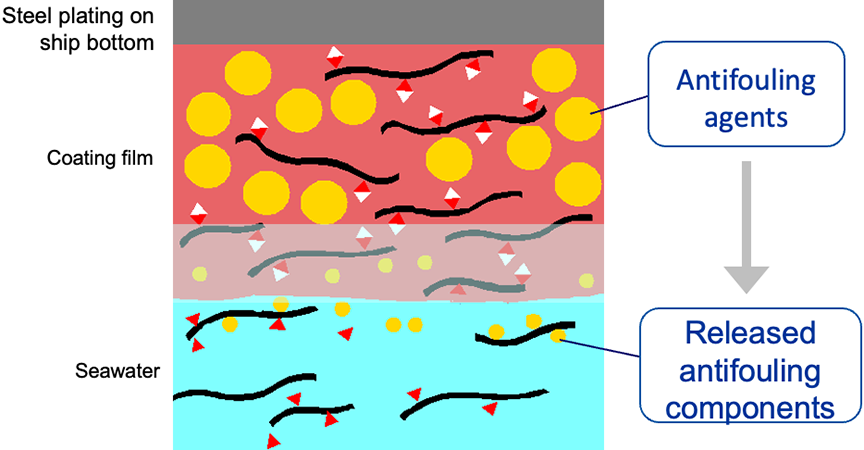
Unlike other coatings, antifouling coatings exert their effect through controlled dissolution. Reacting chemically with seawater, the surface of the coating film gradually dissolves like soap, releasing antifouling agents into the water (Note: this description applies to mainstream hydrolysis-type antifouling coatings).
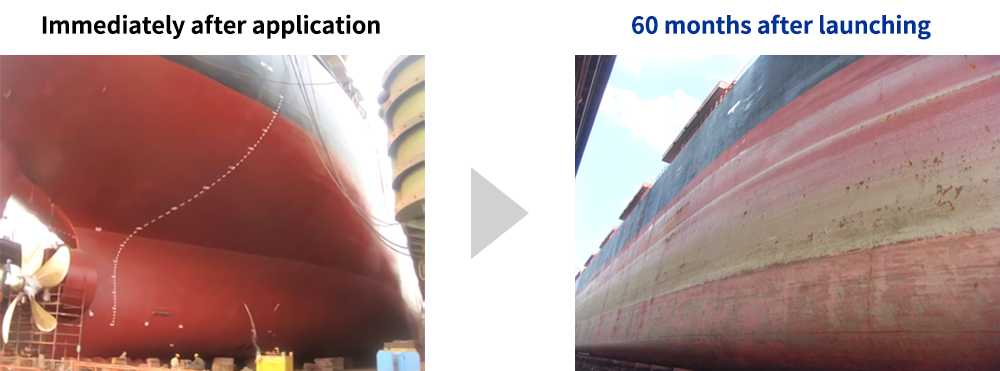
The images below illustrate how the coating surface has “dissolved,” preventing the attachment of marine organisms and other fouling that would impact fuel efficiency. Antifouling coatings are periodically reapplied to maintain hull performance.
Learn more
Click the link below for more information on functional coatings, such as cargo tank coatings that enhance chemical and impact resistance to protect cargo holds from potentially harmful loads (coal, etc.).
Characteristics of the Marine Coatings Market
The size of the global market is estimated at roughly ¥600 billion. Market participants are limited, resulting in a generally oligopolistic market structure.
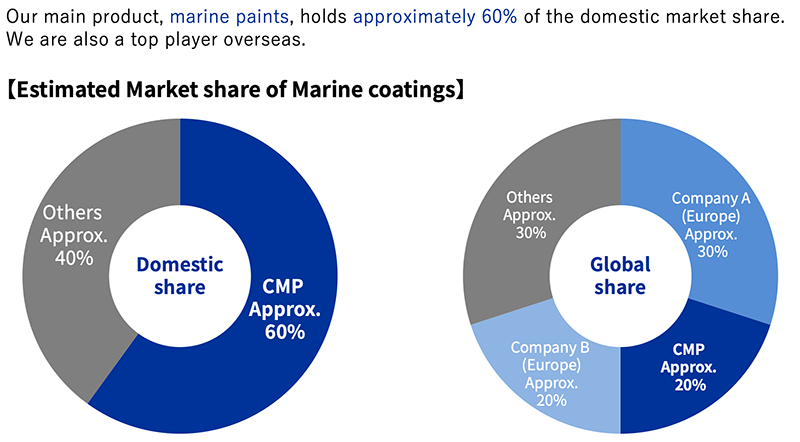
Chugoku Marine Paints’ Strengths

Technical Capabilities
Over more than 100 years, we have amassed high technical capabilities in the extremely specialized field of marine coatings.

Product Development Capabilities
We continuously develop innovative, high-performance, and environmentally friendly products.

Global Supply Chain
Our own network in 20 countries, including production bases in 9 countries around the world.

Relationship with Customers
We have long-standing and strong relationship with domestic & international leading ship owners and shipyards.
These attributes act as the entry barriers to would-be competitors.
Environmental Contribution
Contributions to reducing greenhouse gas emissions
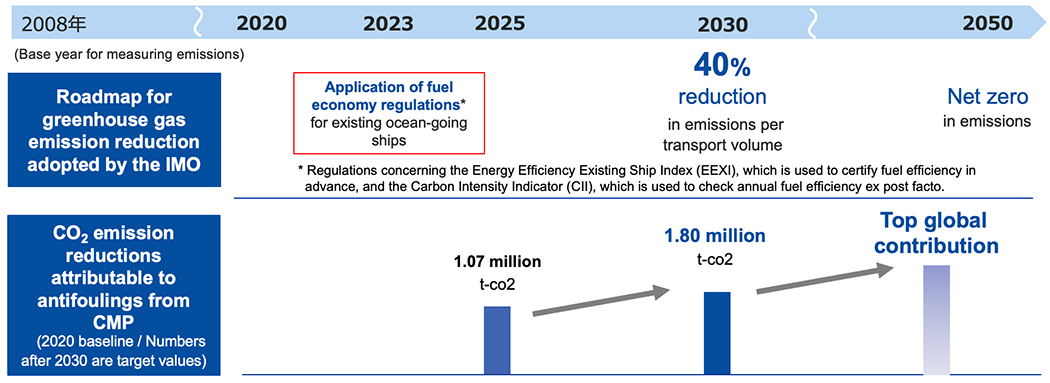
Through a first-ever sector-specific global agreement, the International Maritime Organization (IMO) has set targets aimed at achieving net‑zero GHG emissions from international shipping as early as practicable within this century.
By supplying antifouling coatings, Chugoku Marine Paints helps improve fuel efficiency and reduce GHG emissions from ships.
Discover More About CMP


