TECHNOLOGICAL CAPABILITY
Antifoulings
Coating technology that supports marine logistics
Antifoulings play an essential role in reliable vessel operation by preventing the attachment of marine organisms and keeping hulls clean for extended periods. CMP develops products optimized for specific marine zones, vessel types, and service conditions.
The benefits of hull antifouling
Operating marine vessels without antifoulings is said to reduce fuel efficiency by 40%. This indicates the enormous impact that fouling can have on large vessels. Keeping hulls smooth and reducing water resistance can help reduce fuel consumption and reduce CO2 emissions.
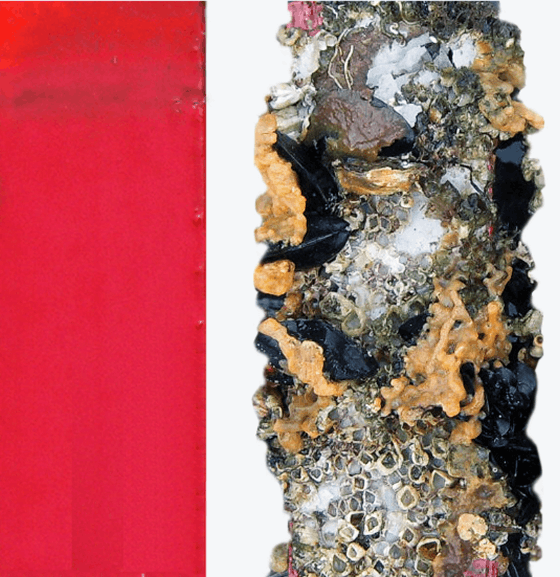
Left: Steel plate WITH antifoulings Right: Steel plate WITHOUT antifoulings
Antifoulings: antifouling mechanisms
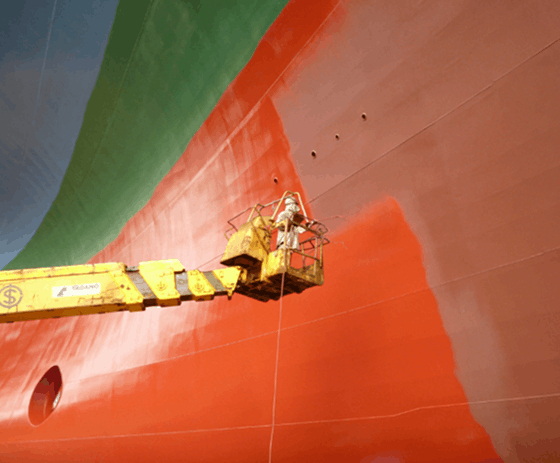
Antifoulings are broadly grouped into three types depending on the mechanism used to prevent attachment of marine organisms. CMP develops a variety of products tailored to specific service environments, vessel materials, and operating conditions.
FIR theory
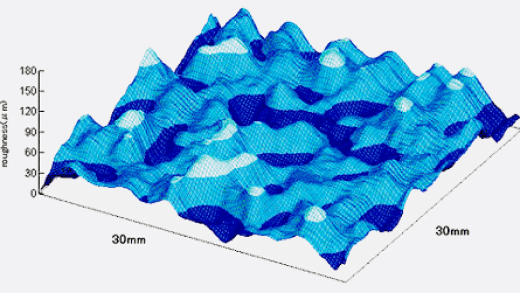
In collaboration with Tokyo University of Science, Tokyo University of Agriculture and Technology, and National Maritime Research Institute (NMRI), CMP has established “FIR theory” (friction increase ratio theory) that estimates coating frictional resistance by measuring and evaluating coating surface roughness and wavelength. The FIR theory can visualize quantitatively the effects of antifoulings on fuel efficiency for a more accurate assessment of coating performance. The FIR theory has even garnered interest in the field of ship design due to its compatibility with the Energy Efficiency Design Index (EEDI) calculations used by the International Maritime Organization.
Coating film analysis
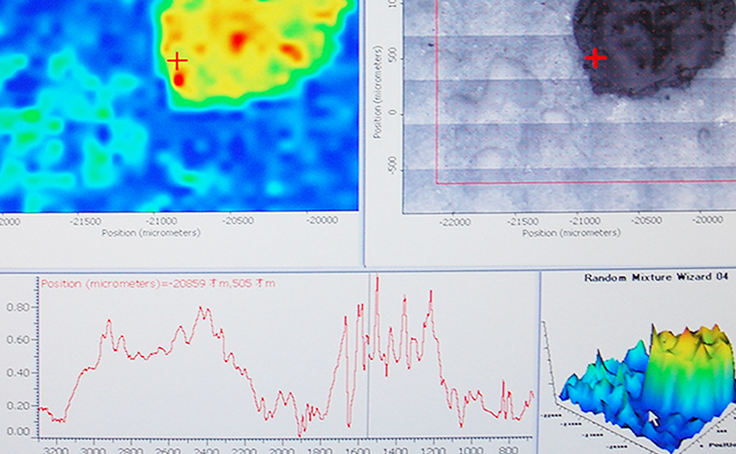
A broad range of advanced analysis technology is needed to accurately identify the components in a coating film, track their behavior during the film-forming process, and understand the chemical changes that occur during durability testing. Because a coating film is a solid film ranging from several micrometers to several hundred micrometers in thickness, both the surface and cross-section (interior) must be analyzed, which requires the analysis of solid surfaces and microscopic regions (local areas). Analyzing the layer interfaces in multi-layer coating films and the boundary interface between the coating and substrate is also important.
Comprehensive support
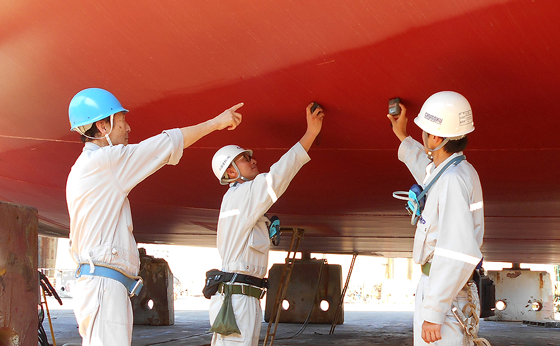
CMP has qualified personnel stationed at major shipyards ready to supervise the coating process, inspect surface preparation before application, verify coating thickness after application, and ensure that coatings are applied according to plan. This support plays a vital role in ensuring CMP’s coatings offer maximum performance. With many years of experience in marine coatings, CMP has earned the trust of shipowners and shipyards alike, and draws on proven expertise and technical know-how to offer valuable on-site support during the coating process.